Every operational decision has a financial outcome. ExecutionOS™ reconstructs how yesterday's execution actually happened — from available operating data — so leaders can see the gap between the plan and reality, and close it before it repeats.
ExecutionOS™ is built around a realistic operating model — not a claim of universal, continuous access to every system in a facility.
Information may come from client-authorized operating data, reports, approved exports, uploaded information, production records, labor information, downtime records, waste information, quality records, scheduling information, service information, structured operating inputs, and authorized integrations where technically available. Integration depth varies by environment and system access.
A plan built on the best available information is accurate the moment it's made. Then conditions shift — a delay, a shortage, a disruption — and priorities compete for attention while new information keeps arriving. The plan doesn't fail because it was wrong. It fails because nothing updated it as reality moved.
ExecutionOS™ reconstructs that gap — what the plan assumed, what actually happened, and what it takes to move from a static plan to adaptive execution.
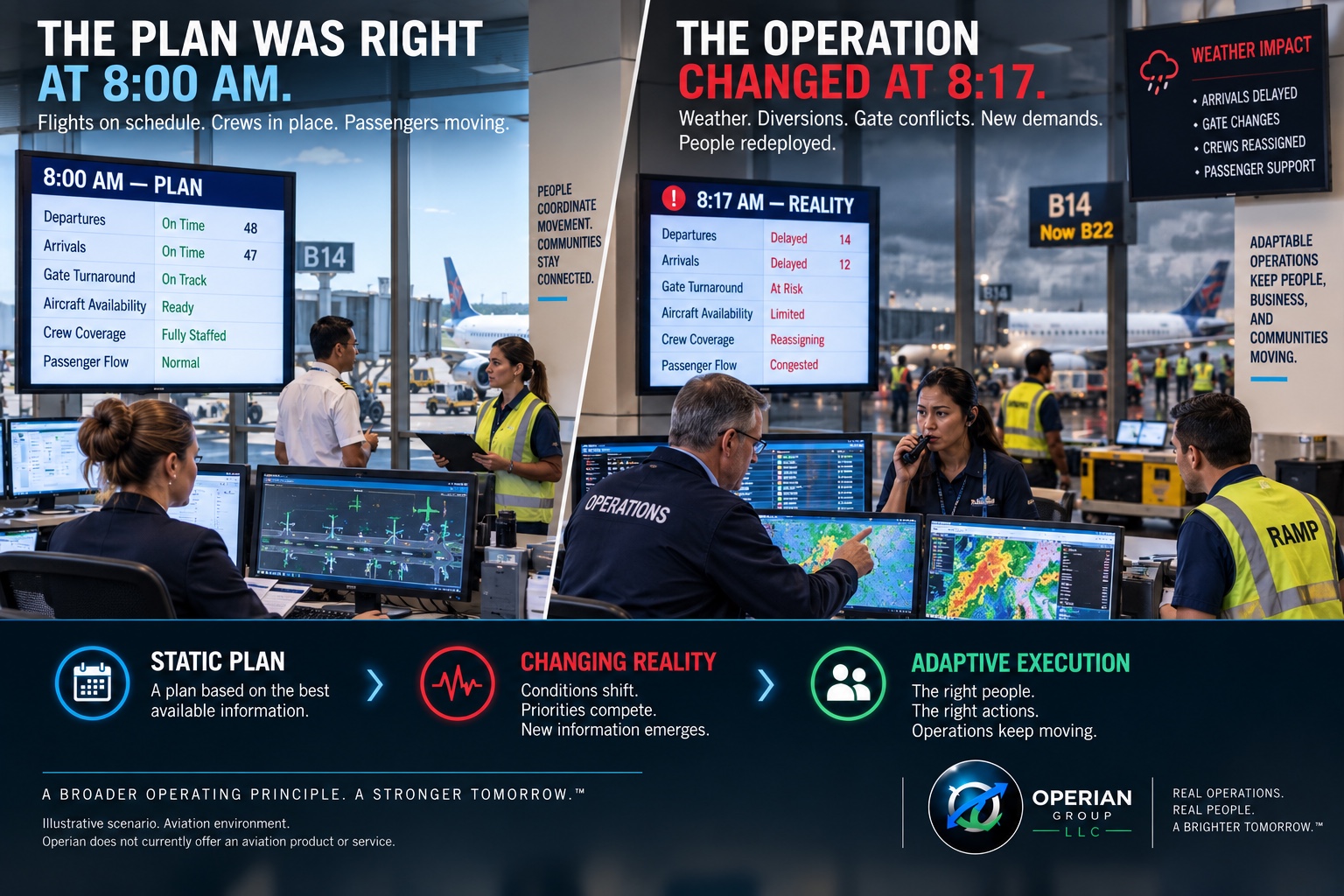
Illustrative scenario. Aviation environment. Operian does not currently offer an aviation product or service. This visual demonstrates the broader Operian execution-gap principle.
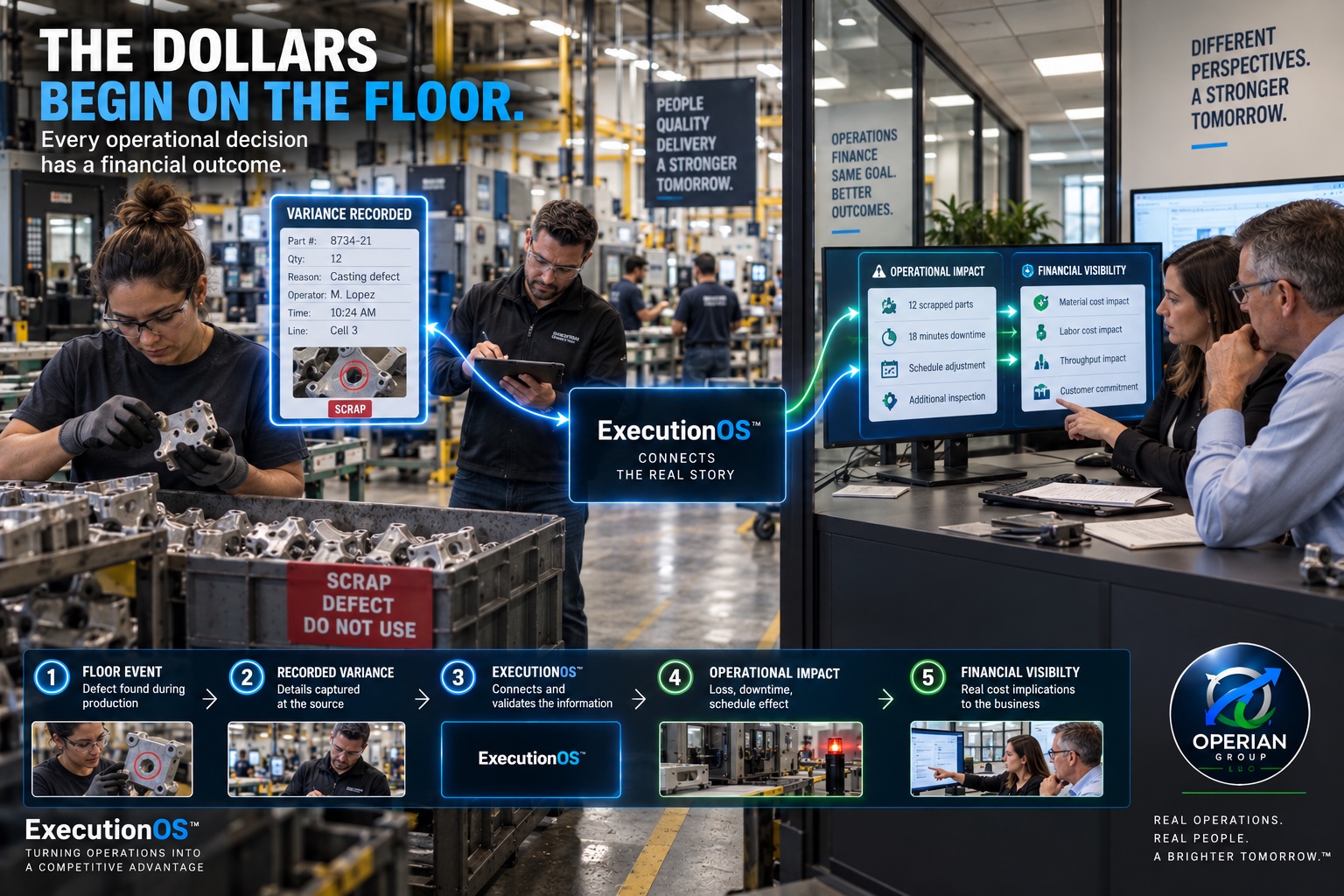
Every operational decision has a financial outcome — scrapped parts, downtime minutes, a schedule adjustment, a customer commitment at risk. ExecutionOS™ connects the floor-level event to its operational impact and its financial visibility, so operations and finance leaders are working from the same story instead of reconciling two different ones after the fact.
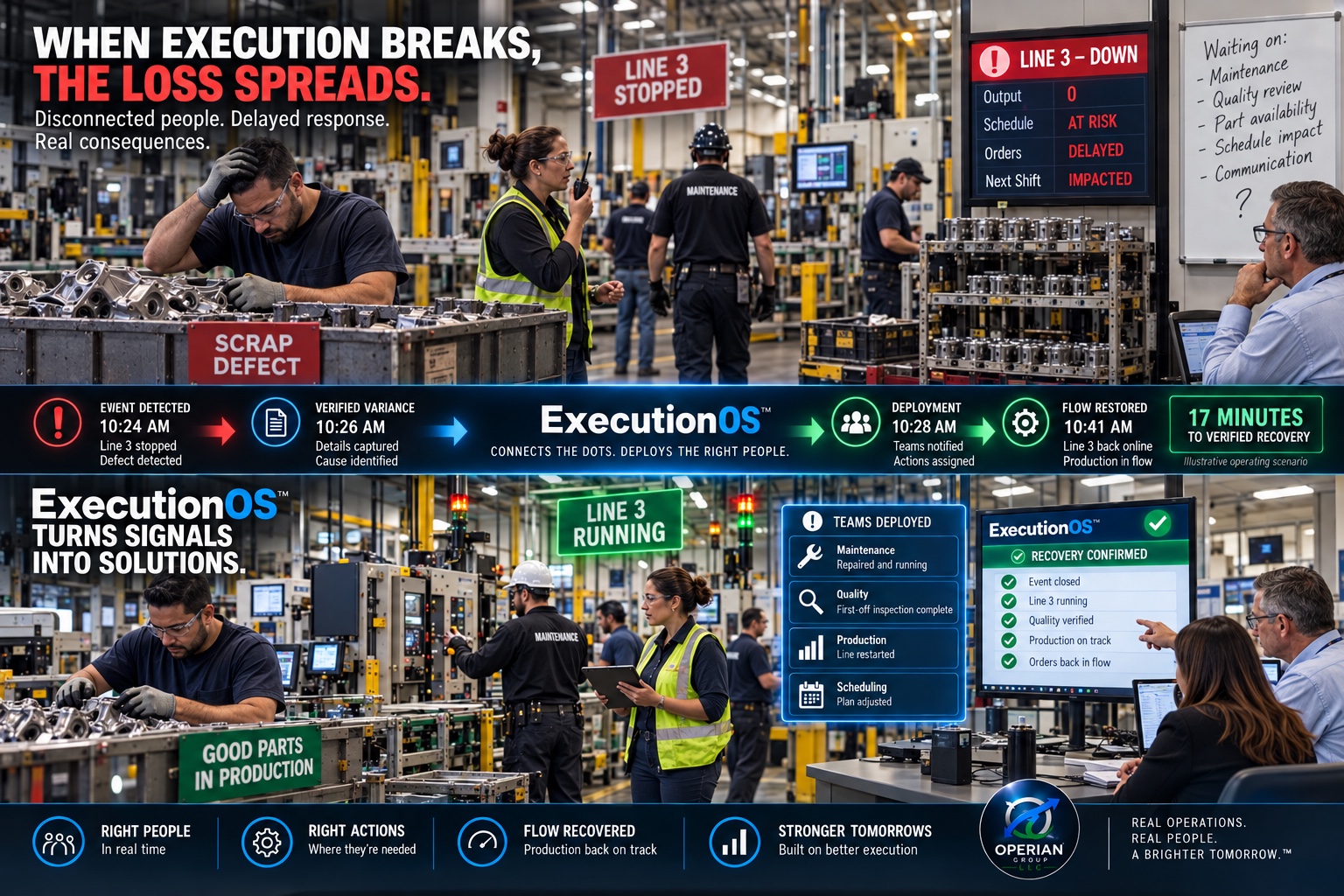
An event is detected. The variance is verified. The right people are deployed with the necessary context — not a raw alert, but what changed, why it matters, and what's needed to respond. Flow is restored, and the response is documented as it happens rather than reconstructed afterward from memory.
Illustrative operating scenario. Recovery timelines shown reflect a demonstration scenario, not a guaranteed or typical result. Actual outcomes depend on the organization's specific data, systems, and engagement scope.
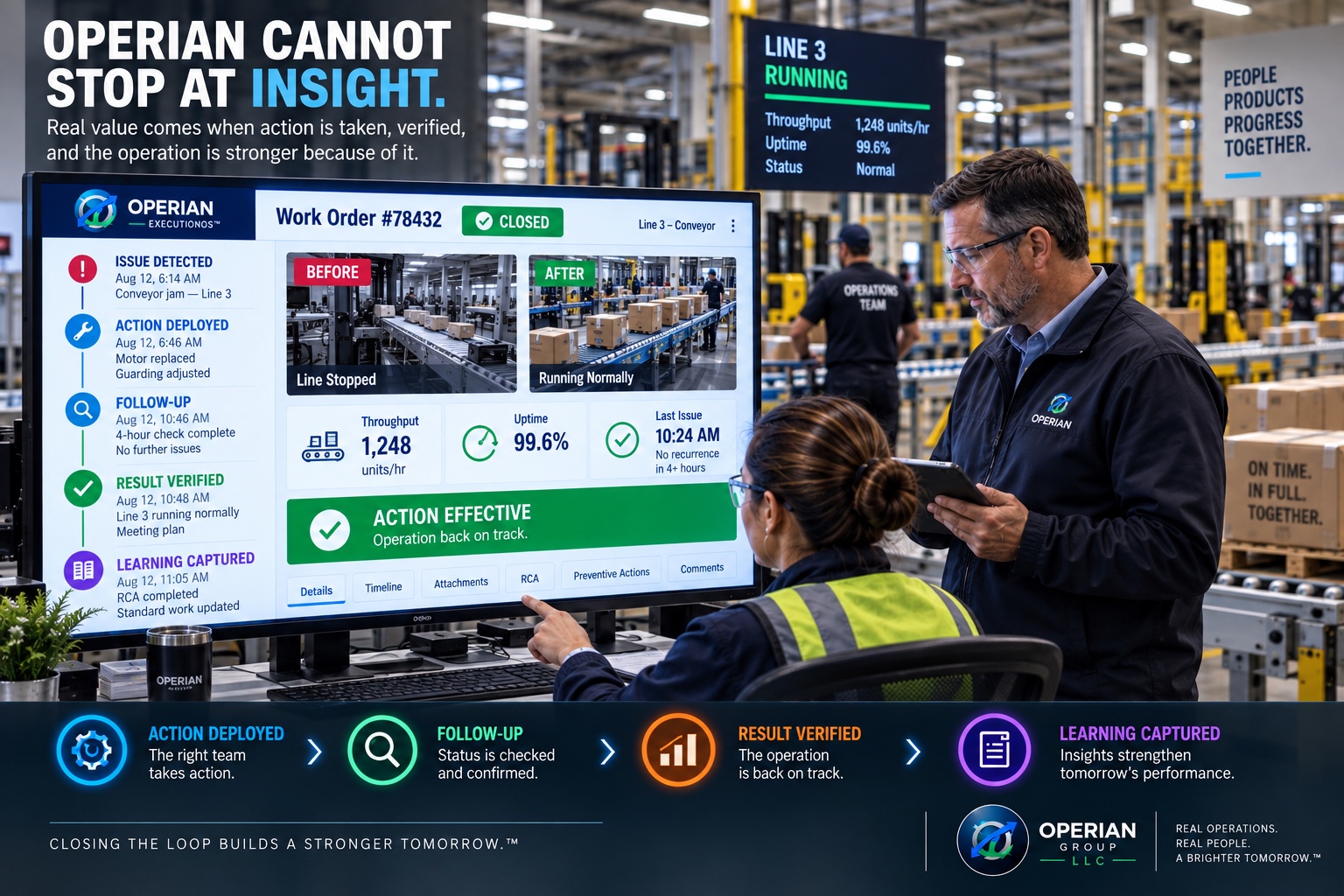
Real value comes when action is taken, verified, and the operation is stronger because of it. Action is deployed. Status is followed up and confirmed. The result is verified against what actually changed. And the learning is captured — so the same root cause doesn't quietly return in three months, disguised as a new problem.
ExecutionOS™ does not continuously monitor every system, connect every enterprise platform in real time, or automatically see everything happening across an operation. There is no universal real-time integration with any ERP, MES, or CMMS. Integration depth depends on the data an organization can lawfully and technically provide — client-authorized exports, structured operating inputs, and approved integrations where they exist.
Technology organizes information. People verify, decide, and act.
Read: Why Production Problems Keep Repeating Even After Corrective Action →
See the full demonstration walkthrough: What Keeps Returning — And What Still Needs to Change? →